YF-ARC-Y001
Long-Range UHF RFID Access Solution
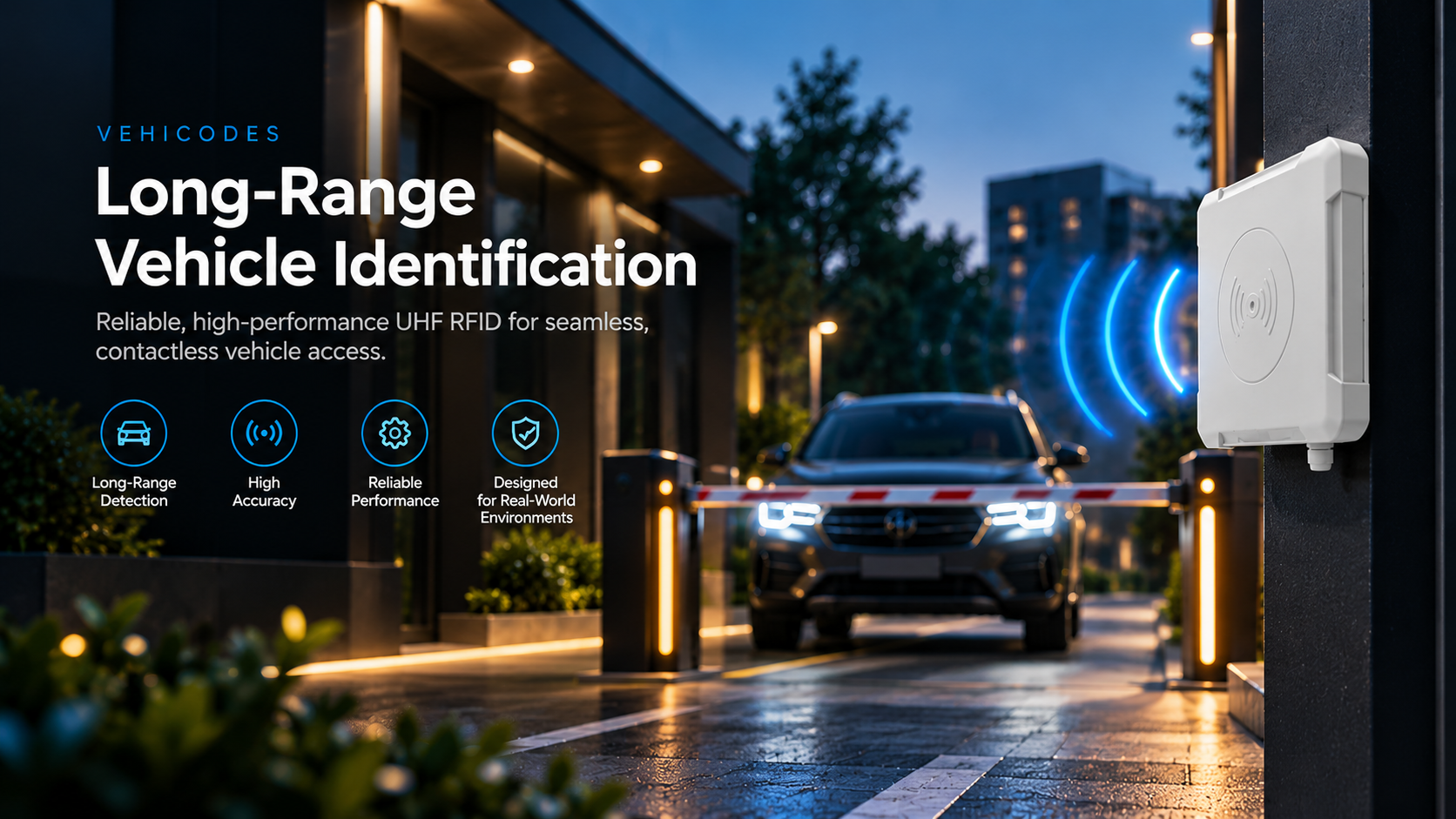
Contactless identification of electronic RFID tags for vehicle access projects. The reader provides a tag identity; access permission and barrier control depend on the selected access system and confirmed integration.
Enquire about YF-ARC-Y001 on WhatsAppProduct brochure
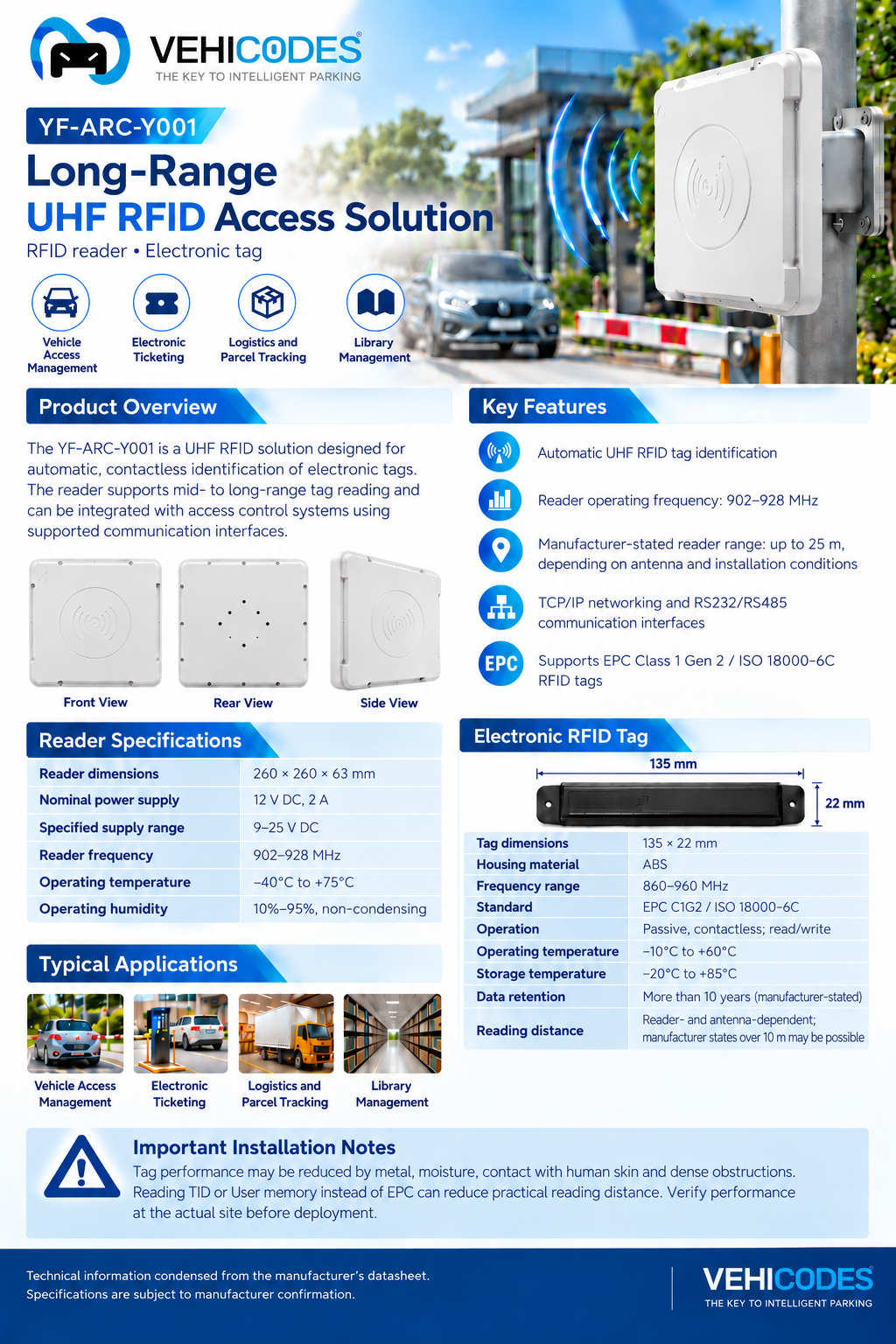
Open the full-size brochure (new tab). The specifications below are transcribed from this brochure and remain subject to manufacturer confirmation.
Key features
- Automatic, contactless UHF RFID tag identification
- TCP/IP networking and RS232/RS485 communication interfaces
- Supports EPC Class 1 Gen 2 / ISO 18000-6C RFID tags
Reading range: manufacturer claims
The manufacturer states a reader range of up to 25 m, depending on antenna and installation conditions. For the illustrated tag, the manufacturer states that over 10 m may be possible, depending on the reader and antenna. These figures are not verified site performance or guaranteed vehicle reading distances.
Reader specifications
- Reader dimensions
- 260 × 260 × 63 mm
- Nominal power supply
- 12 V DC, 2 A
- Specified supply range
- 9–25 V DC
- Reader frequency
- 902–928 MHz
- Operating temperature
- −40°C to +75°C
- Operating humidity
- 10%–95%, non-condensing
Electronic RFID tag
- Tag dimensions
- 135 × 22 mm
- Housing material
- ABS
- Frequency range
- 860–960 MHz
- Standard
- EPC C1G2 / ISO 18000-6C
- Operation
- Passive, contactless; read/write
- Operating temperature
- −10°C to +60°C
- Storage temperature
- −20°C to +85°C
- Data retention
- More than 10 years (manufacturer-stated)
Typical applications
The brochure lists vehicle access management, electronic ticketing, logistics and parcel tracking, and library management. For vehicle access, assess registered-tag use for residential, workplace or fleet lanes. These examples do not establish included software or a supplied application package.
Installation considerations
- Metal, moisture, contact with human skin and dense obstructions may reduce tag performance.
- Reading TID or User memory instead of EPC can reduce practical reading distance.
- Verify tag position, reader and antenna placement, adjacent-lane reads and actual vehicle conditions at the site before deployment.
- Confirm Malaysian frequency and regulatory suitability, controller compatibility, power, mounting, safety devices, software and included equipment for the proposed configuration. The brochure does not establish these project details.